

Editorial
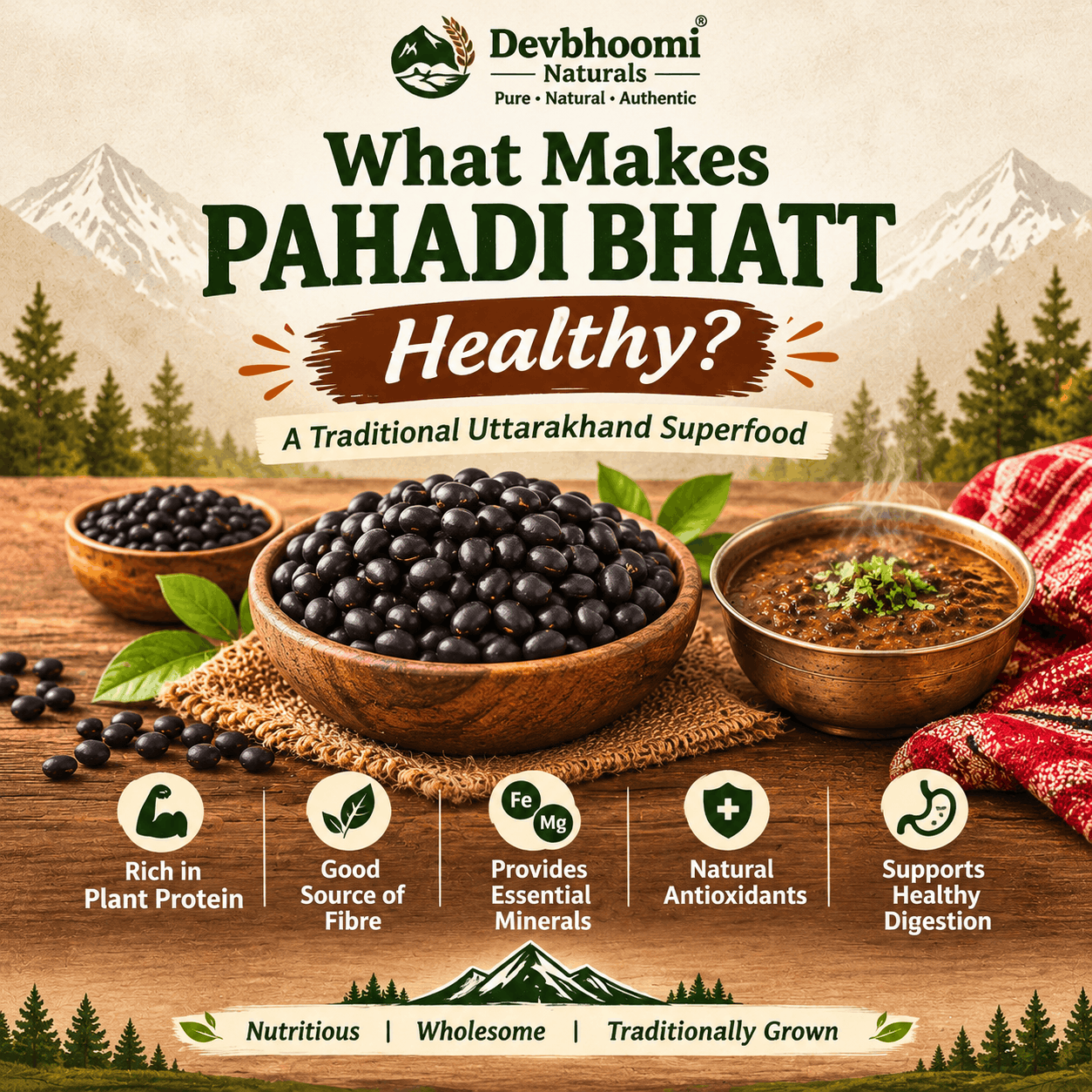
What Makes Pahadi Bhatt Healthy?
Discover Pahadi Bhatt, a traditional black soybean from Uttarakhand known for its earthy flavour and nutritional value. Learn about its plant-based protein, dietary fibre, health-related benefits, and traditional Bhatt Ki Daal recipe. Explore how this Himalayan pulse is prepared and enjoyed in authentic Kumaoni and Garhwali cuisine.
Pahadi Bhatt is a traditional black soybean commonly used in Uttarakhand's Kumaoni and Garhwali cuisine. Known for its earthy flavour, dark colour, and nutritional value, this Himalayan pulse is an important ingredient in regional dishes such as bhatt ki daal and bhatt ki churkani.
Unlike regular yellow soybeans, which are widely processed into tofu and soy milk, Pahadi Bhatt is traditionally cooked whole with local spices. Its rich flavour and versatility make it a distinctive part of Uttarakhand's food culture.
What Is Pahadi Bhatt?
Pahadi Bhatt is a variety of black soya bean belonging to the soybean species Glycine max. These small, dark-coloured beans are traditionally cultivated in the Himalayan region, particularly in Uttarakhand.
Among traditional Pahadi products, Bhatt is valued for its ability to create filling, flavourful meals using simple ingredients. It can be roasted, boiled, or prepared as a thick curry.
What Makes Pahadi Bhatt Special?
-
Traditionally grown and consumed in Uttarakhand.
-
Naturally contains plant-based protein and dietary fibre.
-
Has a distinctive earthy and slightly nutty flavour.
-
Used in traditional Kumaoni and Garhwali recipes.
-
Can be prepared using different regional cooking methods.
Nutritional Benefits of Pahadi Bhatt
According to USDA FoodData Central, raw mature soybeans contain approximately 36.5 grams of protein per 100 grams. These figures represent general soybean reference data and may differ from the nutritional composition of Pahadi Bhatt grown in Uttarakhand.
1. Rich Source of Plant-Based Protein
Black soybeans provide plant protein, which contributes to normal muscle maintenance and tissue repair. They are a useful ingredient in vegetarian meals.
2. Contains Dietary Fibre
Whole soybeans contain dietary fibre that supports normal digestive function and helps make meals satisfying.
3. Provides Important Minerals
Pahadi Bhatt contains minerals naturally present in soybeans, including iron, magnesium, and phosphorus. The exact amounts depend on the variety and preparation method.
4. Contains Natural Antioxidant Compounds
The dark seed coat of black soybean contains anthocyanins, naturally occurring plant pigments studied for their antioxidant properties.
How to Make Traditional Bhatt Ki Daal at Home
A homemade bhatt ki daal recipe combines properly cooked black soybeans with aromatic spices. This simple pahadi dal recipe is suitable for anyone interested in preparing traditional Uttarakhand-inspired food.
Ingredients for Bhatt Ki Daal
-
1 cup Pahadi Bhatt
-
1 medium onion, finely chopped
-
3–4 garlic cloves
-
1 teaspoon cumin seeds
-
½ teaspoon turmeric powder
-
1 teaspoon coriander powder
-
1–2 tablespoons mustard oil
-
Salt and red chilli powder to taste
-
Water as required
Step-by-Step Bhatt Ki Daal Recipe
Step 1: Wash and Soak
Clean the black soybeans thoroughly and soak them in water for approximately 8–12 hours.
Step 2: Pressure Cook
Drain the soaking water and pressure-cook the beans in fresh water until completely tender.
Step 3: Prepare the Tempering
Heat mustard oil in a pan. Add cumin seeds, chopped garlic, and onion. Cook until lightly golden.
Step 4: Add the Spices
Add turmeric, coriander powder, salt, and red chilli powder. Stir gently to combine the flavours.
Step 5: Simmer and Serve
Add the cooked beans with some cooking liquid. Simmer until the gravy reaches your preferred consistency. Serve hot with rice or roti.
Pahadi Bhatt vs Regular Soybeans: What's the Difference?
Both black and yellow soybeans belong to the same species, but their appearance and common culinary uses differ.
|
Features |
Pahadi Bhatt |
Yellow Soybeans |
|---|---|---|
|
Colour |
Black or dark brown |
Yellow |
|
Flavour |
Earthy and nutty |
Mild soybean flavour |
|
Common uses |
Bhatt ki daal, churkani |
Tofu, soy milk, oil |
|
Regional association |
Uttarakhand cuisine |
Various global cuisines |
People searching for soya soya bean may be looking for general soybean information. Pahadi Bhatt specifically refers to the black soybean traditionally used in Uttarakhand cooking.
Why Are Traditional Himalayan Products Important?
Himalayan products such as Pahadi Bhatt, Gahat Dal, Jhangora, and Mandua reflect Uttarakhand's agricultural heritage and regional food traditions.
These ingredients are appreciated for their distinctive flavours, versatility, and traditional cooking methods. Including them in everyday meals introduces variety while keeping regional recipes alive.
Frequently Asked Questions About Pahadi Bhatt
1. What is bhatt ki daal?
Bhatt ki daal is a traditional Uttarakhand dish prepared using black soybeans, spices, and water. It is commonly served with rice or roti.
2. Is Pahadi Bhatt the same as black soya bean?
Yes. Pahadi Bhatt is a regional name for black soybean traditionally consumed in Uttarakhand.
3. How long should Pahadi Bhatt be soaked?
For a basic pressure-cooked dal, soaking the beans for approximately 8–12 hours helps prepare them for cooking.
4. What is the difference between bhatt ki daal and churkani?
Bhatt ki daal is a general black soybean preparation, while bhatt ki churkani is a traditional Kumaoni curry often made with fried soybeans and flour-thickened gravy.
5. Can Pahadi Bhatt be included in a vegetarian diet?
Yes. Properly cooked Pahadi Bhatt provides plant protein and can be included in a balanced vegetarian diet. People with soy allergies should avoid it.
Conclusion
Pahadi Bhatt is a traditional Himalayan pulse that combines distinctive flavour, nutritional value, and regional culinary heritage. Whether prepared as bhatt ki daal or bhatt ki churkani, it offers a satisfying way to explore Uttarakhand's traditional food culture.