

Editorial
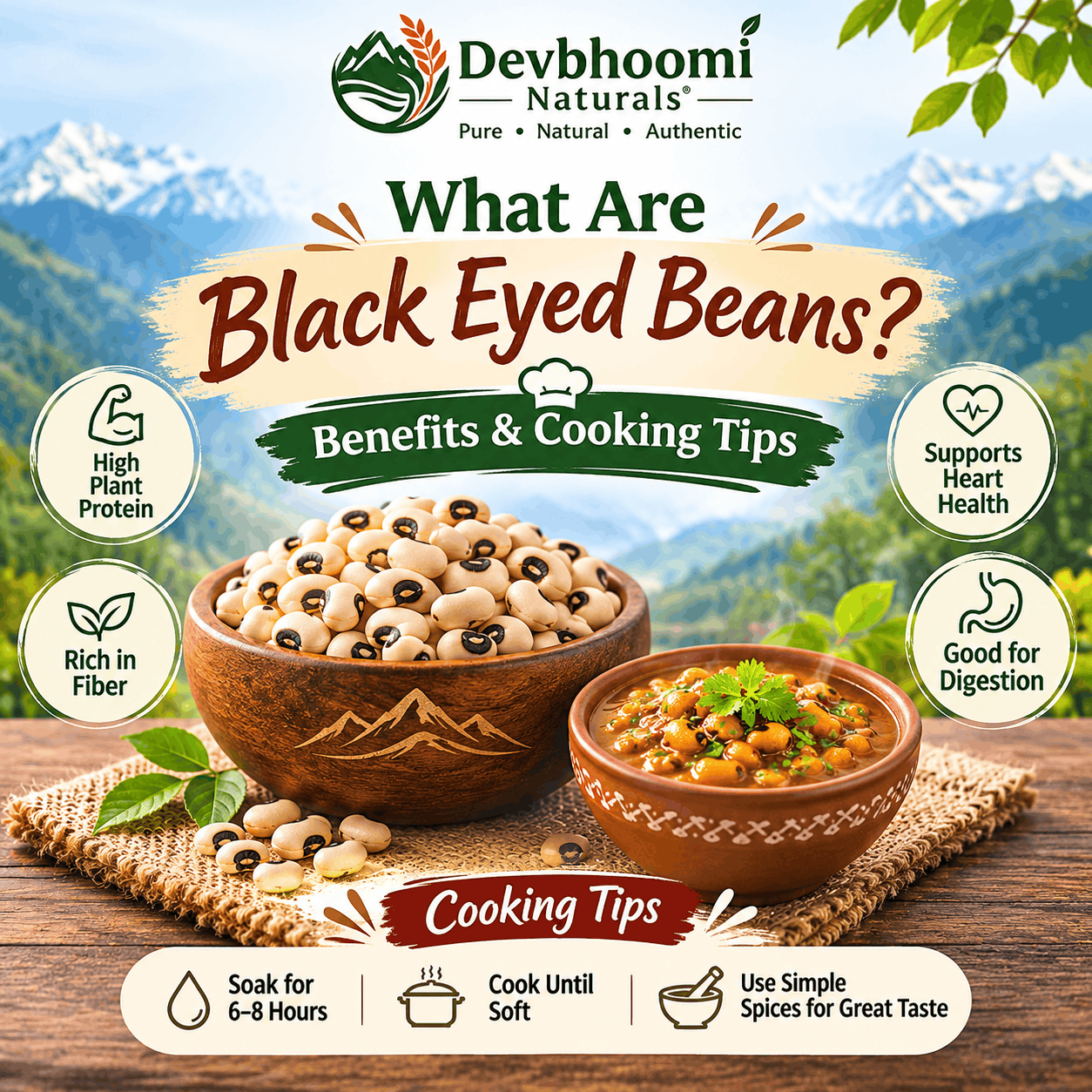
What Are Black Eyed Beans? Benefits & Cooking Tips
Discover the nutritional benefits of black eyed beans (Lobia), a protein- and fibre-rich pulse. Learn about their health benefits, cooking tips, and an easy traditional Indian Lobia recipe to enjoy a wholesome, flavourful meal at home.
Black eyed beans, commonly known as Lobia in India, are nutritious legumes recognised by their cream-coloured skin and distinctive black spot. These versatile beans are widely used in Indian kitchens to prepare flavourful curries, salads, and everyday meals.
Known for their mild, earthy flavour and soft texture after cooking, black eyed peas beans are a practical addition to vegetarian diets. They combine well with traditional spices and can be served with rice, roti, or seasonal vegetables.
What Are Black Eyed Beans?
Black eyed beans are legumes belonging to the cowpea species, Vigna unguiculata. They are widely cultivated and consumed across Asia, Africa, and other regions.
In India, these legumes are commonly called Lobia beans or Chawli. Their distinctive appearance makes them easy to recognise.
What Makes Black Eyed Beans Special?
-
Cream-coloured beans with a characteristic dark eye.
-
Naturally contain plant-based protein and dietary fibre.
-
Have a mild flavour that absorbs spices effectively.
-
Suitable for curries, salads, and rice dishes.
-
Can be stored dried and prepared when needed.
Nutritional Benefits of Black Eyed Beans
Lobia provides several nutrients that contribute to a balanced eating pattern.
1. Good Source of Plant-Based Protein
Black eyed beans contain plant protein, making them useful for vegetarian meals. Protein supports normal tissue growth and maintenance.
2. Contains Dietary Fibre
Lobia provides dietary fibre, which contributes to digestive health and helps make meals satisfying.
3. Provides Important Minerals
Black eyed peas contain minerals such as iron, magnesium, potassium, and phosphorus. Their exact nutritional composition varies with the variety and cooking method.
4. Naturally Low in Saturated Fat
Plain cooked Lobia is naturally low in saturated fat. The nutritional profile of a finished dish also depends on the oil and other ingredients used.
How to Make Lobia Curry at Home
A traditional Indian Lobia curry combines tender black eyed beans with onion, tomato, and aromatic spices. It is a convenient choice for lunch or dinner.
Ingredients for Lobia Curry
-
1 cup dried Lobia
-
1 medium onion, chopped
-
2 tomatoes, finely chopped
-
3 garlic cloves, crushed
-
1 teaspoon cumin seeds
-
½ teaspoon turmeric powder
-
1 teaspoon coriander powder
-
1–2 tablespoons cooking oil
-
Salt and chilli powder to taste
-
Water as required
Step-by-Step Lobia Recipe
Step 1: Wash and Soak
Rinse the beans thoroughly and soak them in clean water for approximately 6–8 hours.
Step 2: Cook the Beans
Drain the soaking water and pressure-cook the Lobia with fresh water until completely tender.
Step 3: Prepare the Masala
Heat oil in a pan. Add cumin seeds, onion, and garlic. Cook until the onion becomes lightly golden.
Step 4: Add Tomatoes and Spices
Add chopped tomatoes, turmeric, coriander powder, chilli powder, and salt. Cook until the tomatoes soften.
Step 5: Combine and Simmer
Add the cooked beans and some cooking liquid. Simmer for 8–10 minutes to combine the flavours. Serve with rice or roti.
Black Beans vs Black Eyed Beans: What's the Difference?
People sometimes confuse black beans and black eyed beans, but they are different legumes.
Black Eyed Beans
Black eyed beans have cream-coloured skin with a distinctive dark spot. They belong to the cowpea species, Vigna unguiculata, and have a mild, earthy flavour. They are commonly used in Indian Lobia curry, salads, and rice dishes.
Black Beans
Black beans have a dark outer skin and belong to the common bean species, Phaseolus vulgaris. They have a richer, earthier flavour and are frequently used in soups, stews, and rice-based dishes.
Search phrases such as bean black eye or black beans black eyed beans often refer to comparisons between these two ingredients.
How to Store Black Eyed Beans Properly
Dried Lobia should be kept in an airtight container in a cool, dry location away from direct sunlight.
After opening a packet, transfer the beans to a clean container to protect them from moisture and insects. Always check the product's best-before date.
Frequently Asked Questions About Black Eyed Beans
1. Are Black Eyed Beans and Lobia the Same?
Yes. Lobia is the commonly used Indian name for black eyed beans, also known as black eyed peas.
2. Are Black Eyed Peas Beans Healthy?
Black eyed peas provide plant protein, dietary fibre, and minerals. They can be included in a varied, balanced diet.
3. Do Black Eyed Beans Need Soaking Before Cooking?
Soaking is recommended because it can reduce cooking time and help the beans cook more evenly. Always cook them thoroughly.
4. Can Black Eyed Beans Be Used in Salads?
Yes. Fully cooked and cooled Lobia can be mixed with vegetables, herbs, lemon juice, and seasonings to prepare salads.
5. Where Can I Buy Black Eyed Beans Online?
You can buy black eyed beans online from Devbhoomi Naturals for preparing traditional curries, salads, and everyday meals.
Conclusion
Black eyed beans are versatile legumes that combine mild flavour with useful nutritional qualities. Whether prepared as a traditional Indian Lobia curry or added to salads, they offer a practical way to include more pulses in everyday meals.
Devbhoomi Naturals offers Lobia for households interested in traditional Indian cooking and wholesome ingredients.