
Editorial
Pahadi Black Soybean vs White Soybean: What’s the Difference?
Understand the difference between Pahadi black soybean and white soybean, including taste, cooking style, nutrition and traditional use in Uttarakhand kitchens.
Pahadi Black Soybean vs White Soybean: What’s the Difference?
If you’ve explored traditional Uttarakhand foods, you’ve probably come across Kala Bhatt—the local black soybean that is used in dishes like Bhatt ki Churkani. At the same time, white soybeans are also widely available in the market and are used in different kinds of recipes and processed foods. So how are these two soybeans different, and which one should you choose for your kitchen?
In this guide, we compare Pahadi black soybean vs white soybean in terms of appearance, taste, traditional use, cooking style and general nutritional value. If you’re new to Kala Bhatt, you may also want to read our full guide on Kala Bhatt benefits.
What Is Pahadi Black Soybean?
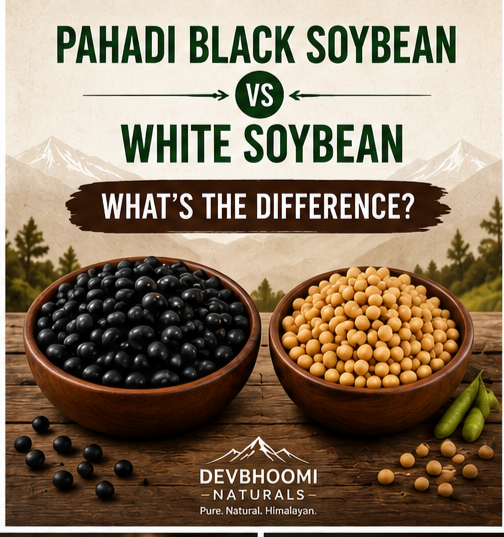
Pahadi black soybean is commonly known in Uttarakhand as Kala Bhatt. It is a dark-coloured soybean traditionally grown in hill regions and used in local dishes such as Bhatt ki Churkani. Compared with white soybean, Kala Bhatt has a stronger regional identity and is more closely associated with traditional Himalayan cooking.
What Is White Soybean?
White soybean is the more common soybean variety seen in many markets. It is used in a wide range of products, from soy chunks and soy flour to tofu and other processed foods. White soybean is versatile, but in home kitchens it is not always used in the same traditional way that Kala Bhatt is used in Uttarakhand cuisine.
Black Soybean vs White Soybean: Quick Comparison
| Feature | Pahadi Black Soybean (Kala Bhatt) | White Soybean |
|---|---|---|
| Colour | Dark black or deep brown-black | Cream / pale yellow / white |
| Traditional use | Common in Uttarakhand dishes like Bhatt ki Churkani | Used widely in soy products, tofu, flour and processed foods |
| Taste | Earthier and more robust in traditional curries | Milder flavour |
| Cultural relevance | Strong connection with Pahadi cuisine | More common in general soy processing and commercial use |
| How it’s usually eaten | Whole bean curries and regional recipes | Whole beans, soy chunks, tofu, soy flour and other products |
Key Differences Between Pahadi Black Soybean and White Soybean
1. Traditional culinary use
The biggest difference is cultural and culinary. Kala Bhatt is strongly associated with Uttarakhand and is commonly cooked as a whole bean dish. White soybean, on the other hand, is often used as an ingredient in soy-based products rather than a traditional regional recipe.
2. Taste and texture
Kala Bhatt usually has a deeper, earthier flavour that works beautifully in slow-cooked curries and gravies. White soybean is milder and may be chosen when you want a more neutral soy flavour.
3. Meal style
If you want to cook traditional Pahadi food, Kala Bhatt is the more relevant choice. If you want to experiment with tofu, soy flour or soy-based recipes, white soybean may be more practical.
4. Buying intent
People buying Kala Bhatt are often looking for an authentic Uttarakhand ingredient. People buying white soybean may be shopping for general-purpose soy or high-protein pantry staples.
Nutrition: Is One Better Than the Other?
Both black soybean and white soybean are generally known for their plant-based protein and versatility in vegetarian diets. The exact nutrient profile depends on variety, processing and serving style, so it’s best not to think in terms of one being universally “better”. Instead, the right choice depends on what you want to cook and whether you’re looking for a traditional regional ingredient or a more general soy option.
When to Choose Kala Bhatt
- When you want to cook Bhatt ki Churkani or other Uttarakhand dishes
- When you want a traditional Pahadi pantry ingredient
- When you prefer earthy, slow-cooked whole bean recipes
- When you want to explore Himalayan pulses beyond regular rajma and dal
When White Soybean May Be More Useful
- When you need soybeans for tofu, soy flour or soy milk
- When you want a milder soy flavour
- When you are buying soybean for broader pantry use rather than regional cooking
How to Cook Kala Bhatt
Kala Bhatt is usually soaked overnight and then cooked slowly or pressure-cooked before being used in curries. A classic preparation is Bhatt ki Churkani, a traditional Kumaoni dish. If you want a full step-by-step guide, see our recipe post on Bhatt ki Churkani.
Related Uttarakhand Foods to Explore
If you enjoy traditional Pahadi ingredients, you may also like:
FAQs
Is Kala Bhatt the same as black soybean?
Yes. Kala Bhatt is the Uttarakhand name commonly used for a traditional black soybean variety used in local cuisine.
Can I use white soybean instead of Kala Bhatt?
You can use white soybean in many soy-based recipes, but it won’t give the same traditional flavour and experience as Kala Bhatt in Uttarakhand dishes.
Which soybean is better for Bhatt ki Churkani?
Kala Bhatt is the traditional choice for Bhatt ki Churkani.
Conclusion
The difference between Pahadi black soybean and white soybean is not just about colour—it’s also about taste, regional identity and how you plan to use the ingredient. If you want to cook traditional Uttarakhand dishes and explore authentic Himalayan ingredients, Kala Bhatt is the more relevant choice. For more regional ingredient guides, browse our posts on Kala Bhatt, Gahath Dal and Uttarakhand Superfoods.